Free Shipping


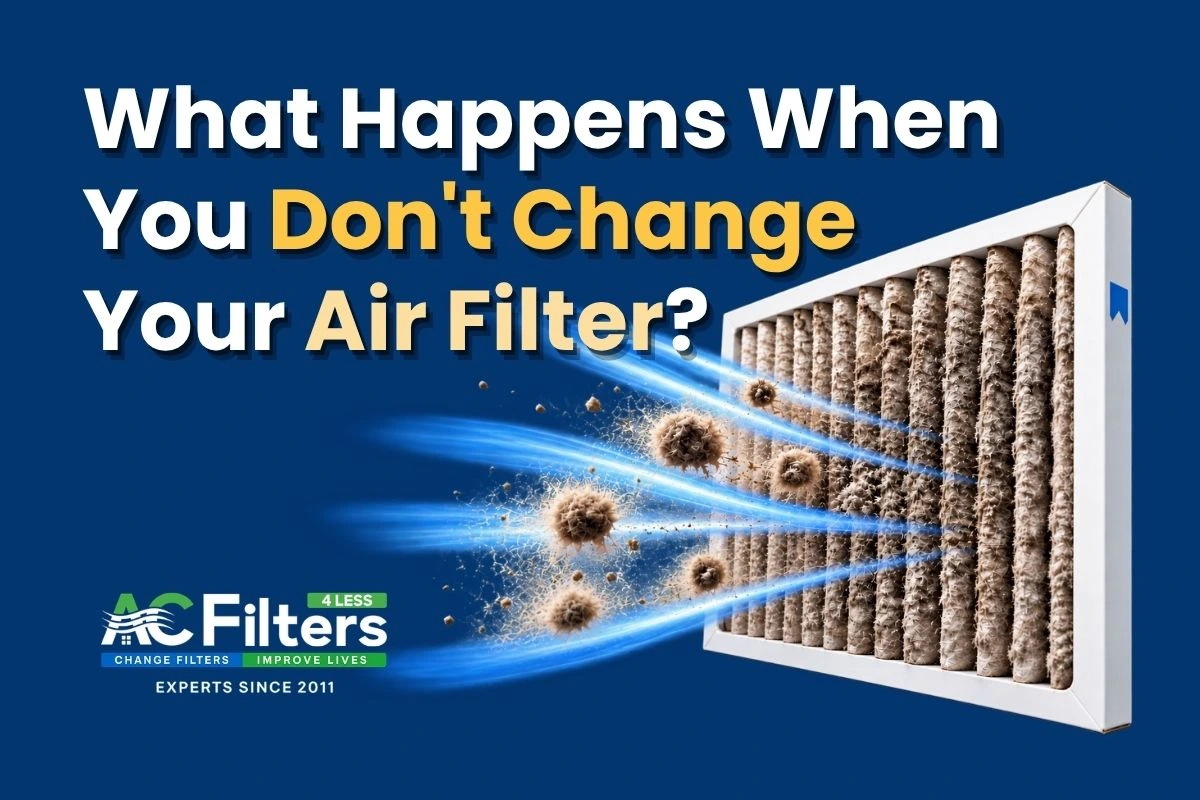
Quick Answer: A dirty air filter restricts airflow through your HVAC system. Over time, it can make the system run longer, increase energy use, reduce cooling performance, and put extra strain on components such as the blower motor and evaporator coil.
Most homeowners know they should change their air filter. The problem is that the system keeps running even when the filter is badly clogged, so it's easy to put the change off until something goes wrong.
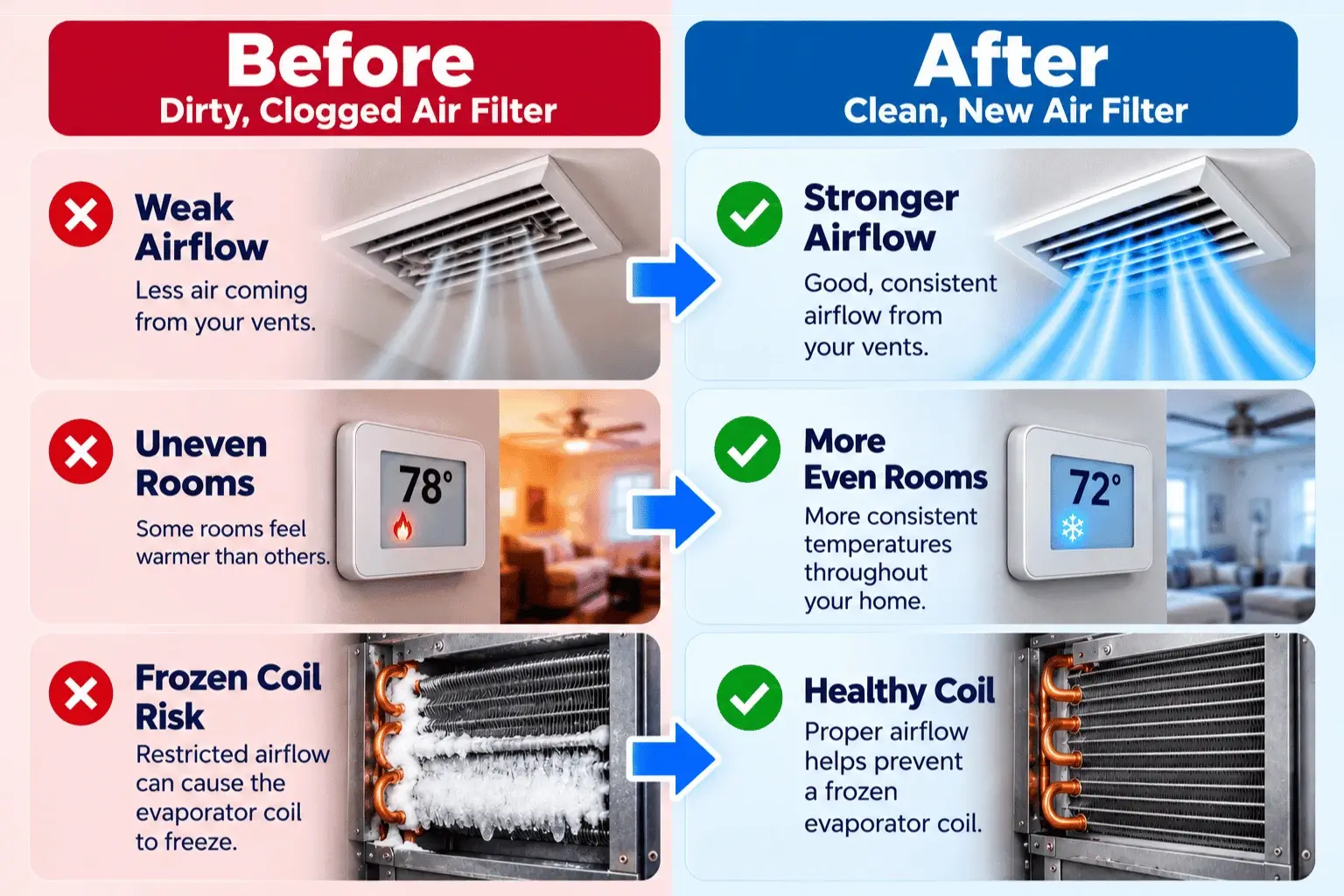
The trouble is that a filter can become too dirty long before the system stops working. As dust and debris build up, less air can move through the filter. Your HVAC system then has to work harder and run longer to keep your home comfortable, and that strain shows up in ways that are easy to miss: higher energy bills, weaker airflow, uneven temperatures, poor cooling performance, and in serious cases, a frozen evaporator coil.
This article focuses on what happens to your HVAC system when a dirty filter is left in too long. For recommended replacement schedules based on filter type, home conditions, and MERV rating, see how often you should change your air filter.
How a Dirty Air Filter Affects Your HVAC System: 7 Things That Happen
So what happens when you don't change your air filter? It starts with airflow. As the filter gets clogged, your system has to work harder to move air through your home, and that strain ripples through everything from your energy bill to your evaporator coil.
1. Airflow Drops and Your System Works Harder
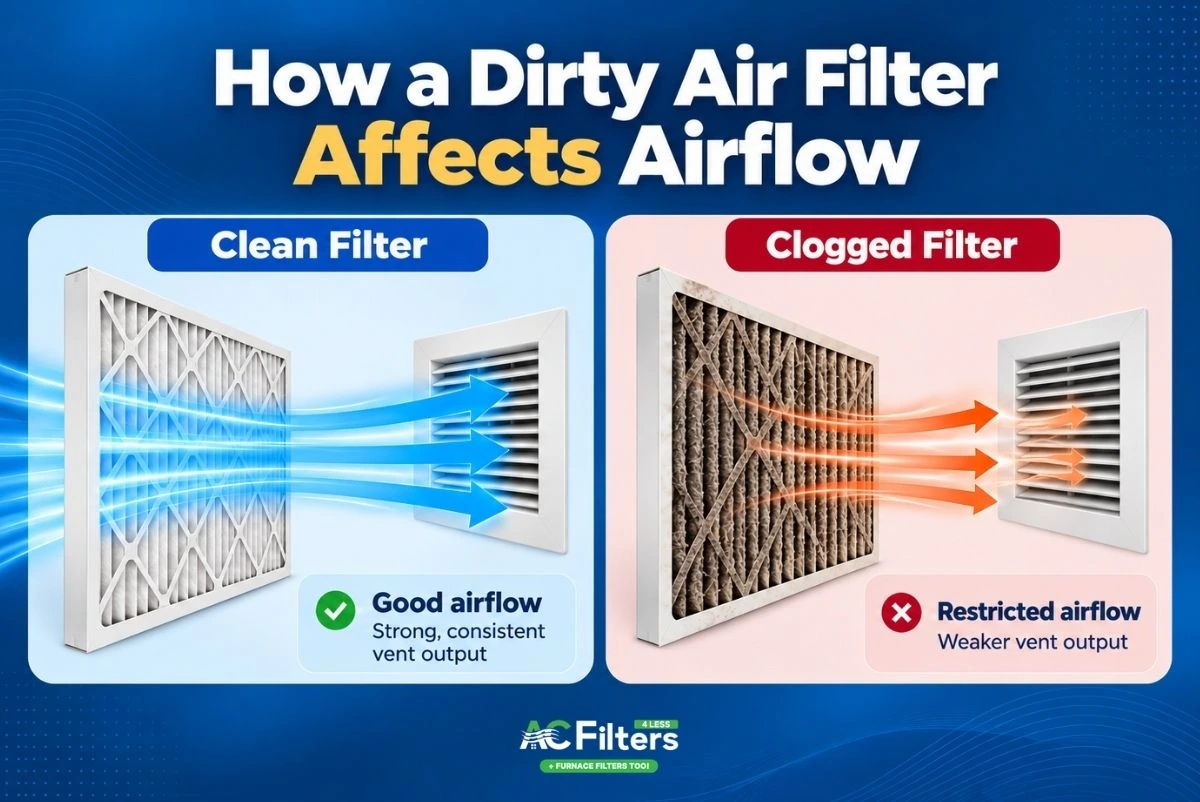
One of the first things you'll notice with a dirty filter is weaker airflow.
As dust builds up on the filter, there is less open space for air to pass through. The air coming from your vents may not feel as strong, and your AC may need to run longer to reach the temperature you've set. That extra runtime also means more work for components such as the blower motor.
A clogged filter doesn't stop the system from working right away. It makes the system work harder to do the same job.
The table below shows how filter condition maps to real-world impact on your system:
| Filter Condition | What You May Notice | Likely Impact |
|---|---|---|
| Lightly loaded | Slight dust buildup | Normal airflow and runtime |
| Moderately clogged | Weaker vent output | Longer cooling cycles and higher energy use |
| Severely clogged | Warm rooms, noisy system, possible icing | Reduced cooling performance and more strain |
| Fully blocked | Very little airflow | Possible shutdown or frozen coil |
Source context: The U.S. Department of Energy notes that replacing a dirty filter can reduce air conditioner energy use by 5% to 15%
2. Your Energy Bill Goes Up
Can a dirty air filter increase your electric bill? It can.
When airflow is restricted, your AC may need to run longer to cool your home to the temperature on the thermostat. More runtime means more electricity used, which can increase your monthly cooling costs.
According to the U.S. Department of Energy, replacing a dirty filter with a clean one can reduce an air conditioner's energy consumption by 5% to 15%. For a household spending $2,000 or more annually on energy, that's a meaningful savings - from a fix that takes under two minutes. Heating and cooling account for roughly 40 to 50% of the average American home's energy bill. That makes the HVAC system the single largest energy consumer in most homes.
If your AC seems to be running longer than usual and the filter is visibly dirty, checking the filter is a good place to start.
Check your filter regularly rather than waiting for a higher electric bill to signal a problem.
3. Can a Dirty Air Filter Cause AC to Freeze? Yes, Here's How
Yes, restricted airflow from a clogged filter can contribute to a frozen evaporator coil. This is one of the more serious consequences of skipping filter changes.
Your evaporator coil needs enough airflow across it to work properly. When a dirty filter severely restricts airflow, the coil can become too cold and ice may begin to form.
According to HVAC Laboratory, restricted airflow is one possible cause of a frozen evaporator coil. A severely clogged filter can contribute, but low refrigerant, blower problems, thermostat issues, and other equipment faults can also cause icing.
Once ice develops, it can restrict airflow further and make it harder for the system to cool your home.
Signs that your AC may be freezing include:
- Ice on the indoor unit or refrigerant line
- Weak or warm air coming from the vents
- Poor cooling performance
- Water around the unit after the ice melts
If you see ice, turn off the cooling and check the filter. If the problem returns after replacing a dirty filter, there may be another issue that needs professional attention.
4. Can a Dirty Air Filter Cause AC Not to Cool? Yes, and Here's Why
A dirty air filter can make it harder for your AC to cool your home properly, and this is one of the most common complaints homeowners notice before they think to check the filter.
You may notice that one room feels comfortable while another stays warm or stuffy. Your AC may also keep running without bringing the whole house to the temperature you've set.
Restricted airflow isn't the only possible cause of uneven temperatures or poor cooling, but it's one of the easiest things to check.
Turning the thermostat down won't necessarily solve the problem. If the system is struggling to move air, lowering the temperature simply asks it to run longer.
If your AC isn't cooling like it used to, check the filter before assuming there's a major problem with the system.
5. Dirty Air Filter Symptoms: What You'll Notice Around the House
Your HVAC filter catches airborne particles as air moves through the system.
When a filter becomes heavily loaded with dust, it can restrict airflow through the HVAC system. That reduced airflow can affect comfort and system performance, while dust and other indoor particles may still remain present in the home from everyday sources.
Dust, pet dander, pollen, and other particles can then remain in circulation around your home.
The U.S. Environmental Protection Agency notes that Americans spend approximately 90% of their time indoors. Concentrations of some pollutants in those spaces are often 2 to 5 times higher than outdoor levels.
Indoor air can contain dust, pet dander, mold, tobacco smoke, and fine particles. Many of these are known asthma triggers. The EPA also notes that biological pollutants such as mold, pollen, dust mites, and pet dander are among the most common indoor air quality concerns.
A dirty filter does not automatically make you sick, but it can contribute to poorer indoor air quality. The EPA's indoor air quality guidance confirms that dust, pet dander, mold, and other pollutants can build up indoors at concentrations higher than outdoor air.
Some dirty air filter symptoms you may notice around the house include:
- More dust settling on furniture
- Increased allergy or irritation symptoms indoors
- A musty smell coming from the vents
- More dust around return-air grilles
If you've noticed these changes, check the filter.
6. HVAC Components Can Wear Faster
Your HVAC system has to work harder when airflow is restricted. If that continues for long periods, components such as the blower motor can experience additional strain.
The compressor is another concern because it's one of the more expensive components in an air-conditioning system to repair or replace.
That doesn't mean a dirty filter will automatically damage your compressor or blower motor. HVAC problems can have many causes. But keeping the filter clean helps your system maintain proper airflow instead of making it work harder than necessary.
A relatively inexpensive filter change is much easier to deal with than an unexpected HVAC repair.
7. Moisture Problems Can Create Conditions for Mold
A dirty filter doesn't automatically cause mold. However, restricted airflow combined with moisture and accumulated debris can create conditions where mold becomes a concern.
A musty smell coming from the vents is one sign worth paying attention to. You may also notice unusual moisture around the indoor unit or other signs of a humidity problem.
If you suspect mold, don't assume replacing the filter will solve it. The source of the moisture needs to be addressed as well.
The EPA recommends addressing moisture problems promptly. According to EPA mold guidance, controlling moisture is the most effective way to prevent mold growth indoors. If you suspect mold in your HVAC system, that requires professional assessment, not just a filter change.
Why Does My Air Filter Get Dirty So Fast?
If you're having to change your air filter every 2 weeks, several common household conditions can fill a filter much faster than the standard schedule. Pets, renovation dust, high pollen, leaky return ductwork, and a fan set to continuous ON are the most frequent culprits. A filter that's too restrictive for your system can also load up faster than expected.
If your filter is consistently getting heavily loaded in less than three weeks, it's worth finding out why rather than simply buying more filters. An HVAC professional can check the system, ductwork, and airflow to identify the root cause.
Signs Your Air Filter Needs to Be Changed
You don't always have to rely on the calendar. The filter itself will tell you. These are the most common dirty air filter symptoms and signs your air filter needs to be changed:
| What You Notice | What It Likely Means |
|---|---|
| Filter is gray, brown, or visibly coated in dust | Filter is overloaded and restricting airflow |
| Can't see light through the filter media | Filter is at or past its useful life |
| Dust buildup around the return-air grille | Filter is no longer capturing particles effectively |
| More dust settling on furniture than usual | The filter may be overloaded, or more dust may be entering from everyday indoor sources, air leaks, or return-side gaps. |
| AC running longer than it used to | Airflow restriction is forcing extended run cycles |
| Some rooms are warmer or stuffier than others | Uneven airflow caused by a clogged filter |
| Allergy or irritation symptoms worse indoors | Airborne particles are circulating instead of being captured |
| Musty smell when the HVAC system starts | Possible moisture or debris buildup in the system |
If the filter looks heavily loaded, replace it even if you haven't reached the date on your reminder.
What to Do Now
If you've just realized your filter has been sitting there for too long, start with two things.
1. Check the filter today. Pull it out and hold it up to a light. If it's visibly loaded with dust or you can barely see through it, replace it now. Don't wait for a scheduled date if the filter is already clogged.
2. Get the right replacement. Check the dimensions printed on the filter frame, then shop replacement AC filters by size and keep a few extras on hand so you're never caught without one.
Frequently Asked Questions
What happens when you don't change your air filter?
When you don't change your air filter, dust and debris build up until airflow through the system is restricted. Your HVAC has to run longer to reach the thermostat setting, which increases energy use and puts extra strain on components like the blower motor and evaporator coil. Over time, this can lead to poor cooling, uneven temperatures, a frozen coil, and higher monthly energy bills.
What happens if you don't change air filter in house?
A clogged filter can reduce airflow and may contribute to more noticeable dust and comfort issues. Indoor air quality also depends on the filter type, household activities, ventilation, pets, moisture, and other pollution sources.
Can a dirty air filter cause AC not to cool?
Yes. A clogged filter restricts the airflow your AC needs to move cooled air through your home. The system may run continuously without bringing the house to the set temperature, and some rooms may feel warmer or stuffier than others. Lowering the thermostat won't fix the problem if the filter is blocking airflow.
Can a dirty air filter cause AC to freeze?
Yes. When a severely clogged filter restricts airflow, the evaporator coil can drop below freezing and ice can form on the unit or refrigerant line. Signs include weak or warm air from the vents, visible ice on the indoor unit, and water pooling around the unit after the ice melts. Turn off the cooling, replace the filter, and let the coil thaw. If icing returns, have the system inspected.
Can a dirty air filter increase electric bill?
Yes. Restricted airflow forces your AC to run longer to reach the thermostat setting. That extra runtime uses more electricity and shows up on your monthly bill. The exact impact depends on how clogged the filter is, the size of your system, and how often the AC runs, but a heavily loaded filter can meaningfully increase cooling costs over a billing cycle.
The Bottom Line
Putting off a filter change may not seem like a big deal when your AC is still running. But as a filter gets dirtier, it can restrict airflow, increase system runtime, affect comfort, and put additional strain on your HVAC system.
The good news is that checking your filter takes only a few minutes.
If it's dirty, replace it with the correct size. Keep a few replacements on hand, write the installation date on each one, and check the filter regularly.
A small filter change today can help you avoid bigger HVAC problems later.